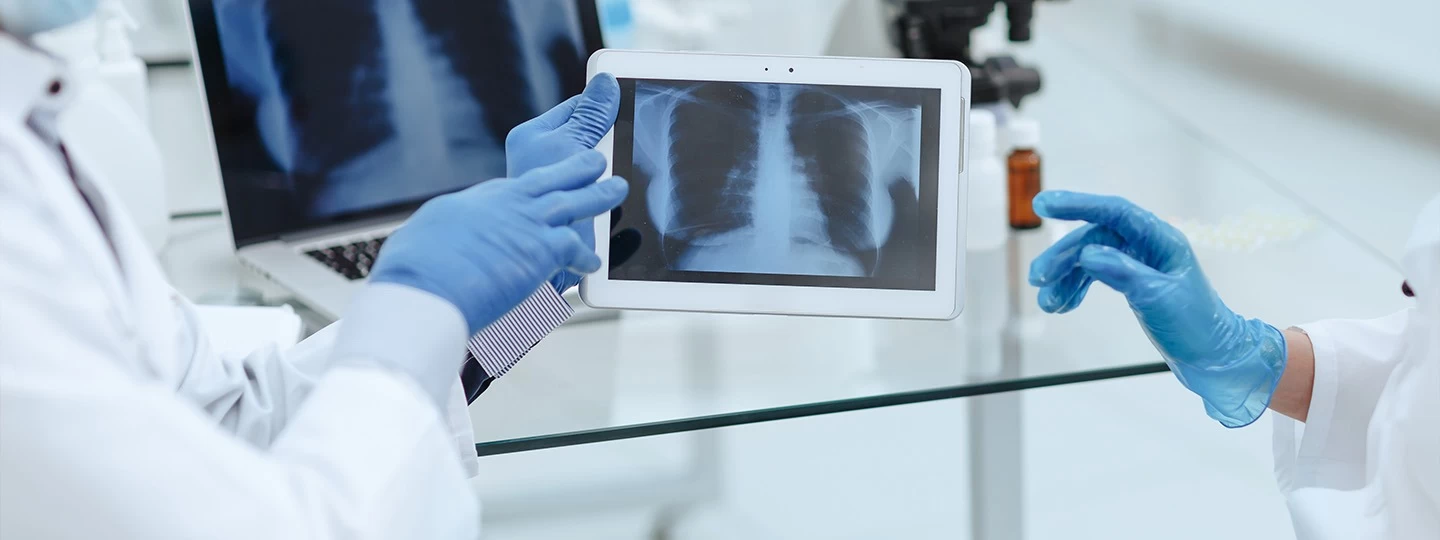
Medical imaging has transformed healthcare by allowing doctors to see and diagnose diseases and injuries that would be impossible to detect otherwise. The most frequent medical imaging procedures are X-rays and computed tomography (CT) scans. Both procedures use radiation to create images of the body's internal components, but they differ in a few ways. If your physician has advised any one of these, you would search for the best pathology lab near me that also offers advanced imaging scans. But what advantages or disadvantages of X-ray and CT scans should you consider before visiting the lab? Continue reading to find out.
What is the Difference Between X-ray and CT Scan?
X-rays and CT scans are both imaging techniques, but they differ significantly in how they capture images and what they reveal. Here’s the quick overview of the difference between these two imaging techniques:
Aspect | X-Ray | CT Scan |
Full Form | Radiograph | Computed Tomography |
Image Type | 2D flat images | 3D cross-sectional images |
Radiation Exposure | Lower (0.1 mSv for chest X-ray) | Higher (1.5 to 6.1 mSv for chest CT) |
Scan Duration | Few seconds | 5 to 30 minutes |
Detail Level | Basic bone and tissue visibility | Detailed organ, tissue, and bone structure |
Best For | Fractures, lung infections, dental issues | Cancer detection, internal bleeding, complex injuries |
Cost | Lower | Higher |
Availability | Widely available | Available at advanced diagnostic centres |
Advantages and Disadvantages of X-rays and CT scans?
Advanced methods and new technologies in healthcare are making most exams give accurate results. Yet each technique or machine comes with its own set of challenges. The following table compares the advantages and disadvantages of X-rays and CT scans to give a complete picture of when and why you can consider one or both of them:
Modality | Advantages | Disadvantages |
X-ray | • Quick and widely available. • Low cost and lower radiation. • Excellent for bone injuries, chest/lung preliminary checks. | • Limited soft-tissue detail. • May miss subtle organ damage or internal bleeding. • A 2D image means overlapping structures can obscure findings. |
CT scan | • High resolution, detailed cross-sectional images. • Better visualisation of organs, blood vessels, and complex fractures. • Useful for emergency trauma, full body check-up, and complex diagnostics. | • Higher radiation exposure – CT scans use many more X-ray slices. • Generally higher cost. • Some scans require contrast dye (which has risks) and may not be available everywhere. |
When Will You Choose One Over The Other?
You will first discuss with your clinician what you are investigating. If the concern is a simple fracture, lung infection or dental issue, an X-ray may suffice. If the situation involves potential internal organ damage, complex anatomy, bleeding, tumour assessment or full body check up tests list as part of a health package, your provider may recommend a CT scan. Consider these factors when choosing imaging services:
Radiation exposure levels
Cost and insurance coverage
Level of detail required
Your specific symptoms and medical history
Your doctor will recommend the most appropriate test based on your specific situation. Many diagnostic centres now offer blood collection from home along with imaging appointments, making it convenient to complete all your tests.
What Else Should You Keep In Mind When Looking For Imaging?
Ensure the centre you choose is a reputable one and shows up in a search for the “best pathology lab near me”.
If you are combining imaging with other services (for example, blood collection from home, health packages), pick a provider that offers those bundled services.
Ask about radiation dose, especially for CT scans and whether there is a low-dose option if appropriate.
For full body check up tests list reviews, ask what the health package includes and whether the imaging modality is justified for you personally.
Schedule Your Imaging Test at Mahajan Imaging & Labs Today!
Whether you undergo an X-ray or a CT scan, your choice will depend on the clinical need, your personal risk (such as radiation exposure) and the convenience offered by the centre. If you are looking for a high-quality provider for diagnostic imaging or bundled health packages, consider reaching out to Mahajan Imaging & Labs. We will help you make the right choice and guide you through the process with clarity and care!
Also read: How 3T MRI Enhances Accuracy in Brain & Spine Imaging 


-1784264830.webp)
-1784177063.webp)
-1784009241.webp)
-1783922228.webp)