What Is the HbA1c Blood Test?
Have you ever thought of a snapshot that could represent your average blood sugar level for your last few months? Well, this is precisely what the HbA1c blood test is all about. It is a glycated haemoglobin test that serves as a straightforward yet effective tool in both the initial phase of diabetes and its subsequent stages. The test measures the amount of sugar that binds to haemoglobin, the component in your red blood cells that carries oxygen. Given that red blood cells live for about 120 days, the examination indicates the average blood sugar level over the last 2 to 3 months.
That is the main advantage of the test: a long-term perspective. In contrast to a daily glucose check, which is subject to considerable variation due to the last meal or time of day, the HbA1c test provides a reliable, stable picture of the patient's long-term blood sugar trends. As such, it is an absolute necessity in the treatment of diabetes and a vital sign for individuals who are likely to get the disease.
The higher the percentage is, the more probable it is that your blood sugar has been elevated over a long period, which is a situation that will eventually increase your risk of dangerous complications significantly.
Why Do Doctors Recommend the HbA1c Test?
The HbA1c blood test is not just a number, it is a deep reflection of your metabolic health. For individuals with diabetes, it is an essential tool for assessing how their current treatment plan is working. Non-diabetic people, on the other hand, it serves as an important early detection device, pointing to prediabetes long before the appearance of more obvious symptoms.
This is an early warning that is necessary because highly elevated HbA1c levels over time are associated very strongly with a wide range of serious complications, such as nerve damage (neuropathy), kidney failure (nephropathy), and increased risk of heart disease. Even a slight but steady decrease in your HbA1c can have a significant impact in reducing these risks.
In addition, the test is an invaluable compass for medical professionals, enabling them to customize and modify the use of medicines, advise on specific lifestyle changes, and establish individualised health goals, which are the main factors in securing a person's well-being over time.
HbA1c Test Procedure: How the Test Is Done
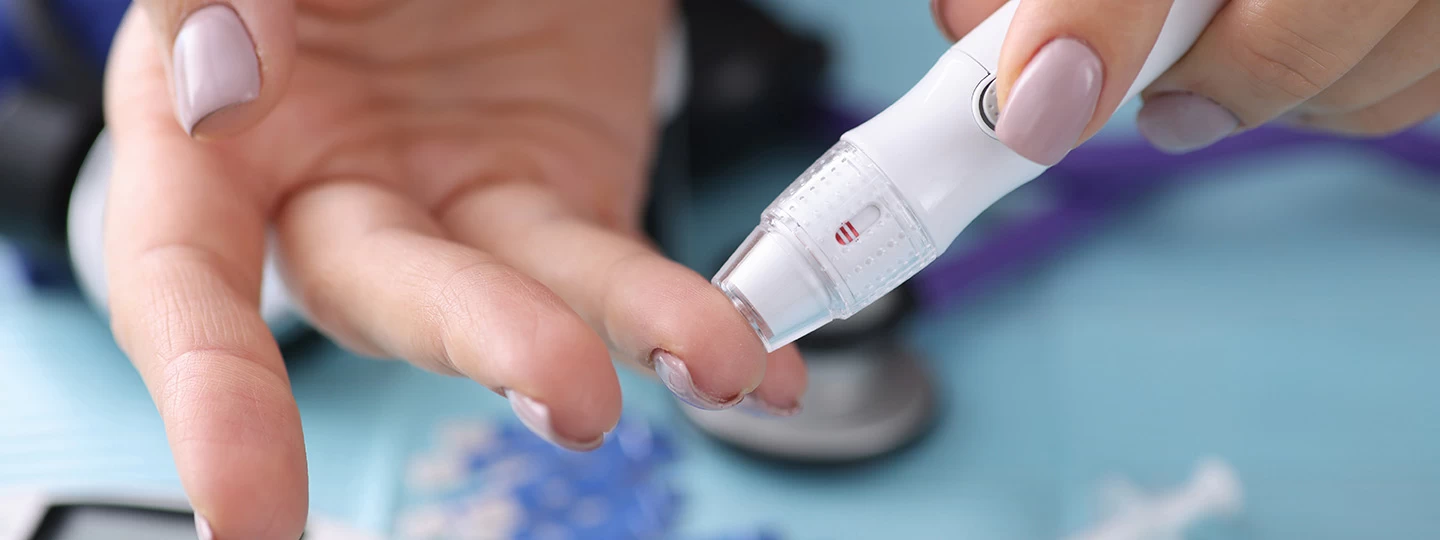
Getting your HbA1c test is very simple, it doesn't take long, and it's a non-invasive procedure. A minimally invasive blood sample from a vein in the arm or a quick and easy finger prick is sufficient. The little blood taken is meant for a laboratory to accurately assess the percentage of glycated haemoglobin. The good part of it is that, due to progress in medical technology, you can get your results a day or two after the test in many modern clinics and labs.
There are some highly advanced point-of-care devices capable of delivering results in a matter of minutes during your visit, providing instant, very convenient feedback. Home HbA1c blood test kits may be available, but the best way to get tested is at a certified lab. Then take the results to your doctor for proper interpretation and the right next steps. The fact that the procedure is so easy and simple means that you really don't have to find any other excuse to put off regular screening.
HbA1c Normal Range Chart
The HbA1c blood test results are communicated as a fraction of the total haemoglobin that is attached to sugar. The table below explains the adult interpretation of these percentages:
HbA1c Level | Interpretation | Corresponding Average Blood Glucose (mg/dL) | Corresponding Average Blood Glucose (mmol/L) | Health Implication |
Below 5.7% | Normal | Below 117 | Below 6.5 | Low risk of diabetes; well-controlled blood sugar. |
5.7% to 6.4% | Prediabetes | 117 to 137 | 6.5 to 7.6 | High risk of developing Type 2 diabetes; immediate lifestyle changes recommended. |
6.5% or higher | Diabetes | 140 or higher | 7.8 or higher | Confirms diagnosis of diabetes; effective management is critical. |
Diabetes patients will generally aim for a glucose level associated with HbA1c of less than 7%. Nevertheless, a vital fact to keep in mind is that this objective is very much dependent on the individual and may be influenced by factors like age, co-existence of other health conditions and general health status. To figure out what exact target is suitable for your case, it is best to check with your healthcare provider.
HbA1c Levels: What Your Results Mean
Knowing your HbA1c test results is an important step towards proactively managing your health.
Prediabetes (e.g., 6.0%): It really is an essential signal that the alarm has been rung. Even though it is not diabetes, the body is sending signals that sugar levels in the blood are too high. It is definitely the time to make preventative lifestyle changes in a radical way, such as following a healthy diet and starting regular exercise, which can halt the development of Type 2 diabetes effectively.
Diabetes (e.g., 7.5% or 8.0%): Such levels are regarded as high and indicate that blood sugar has not been controlled well enough. An HbA1c value of 7.5% is a little more than twice as high as the target for most diabetes patients, whereas 8% is quite alarming. Therefore, a doctor visit to seek advice about how to change your treatment plan - medication, diet, and exercise - to lower your levels and substantially cut down the risk of serious complications, such as cardiovascular and kidney disease, coagulopathies, etc., is a must.
HbA1c Test vs Fasting Blood Sugar (FBS): Which One Is Better?
Both the HbA1c blood test and the Fasting Blood Sugar (FBS) test are diagnostic tools that assess blood glucose levels; however, they are not interchangeable. The FBS test quantifies the level of sugar in the blood at a single point in time, i.e., after an overnight fast (usually 8–12 hours). It is essentially a brief look at the glucose level at that time. On the other hand, the HbA1c test is like an archive, showing the average blood sugar level over the past 2 to 3 months.
The HbA1c test is often considered a better tool for long-term diabetes monitoring and diagnosis, as recent meals, stress, or transient changes do not influence it. The FBS test is a handy tool for on-the-spot tracking and providing an initial indication of a problem. To achieve a complete and precise picture, physicians frequently employ both tests simultaneously, i.e., the FBS to know the current condition and the HbA1c as an indicator of the long-term trend.
Does HbA1c Require Fasting?
One of the major advantages of the HbA1c blood test is that it does not need fasting. In contrast to the Fasting Blood Sugar (FBS) test that necessitates abstaining from food and drink (except water) for a few hours, you are allowed to eat and drink as per your usual routine before your HbA1c blood test. The test is, therefore, extremely easy and handy not only for first-time diabetes and prediabetes diagnosis but also for regular condition monitoring. There is no need for any special preparation, so you can just come to the lab at any time of the day.
How Often Should You Take the HbA1c Test?
The HbA1c blood test frequency should be different for every person, depending on their health condition and whether they have diabetes:
Healthy Adults (No Diabetes/Low Risk): The test is usually advised from one to three years as part of a routine health check-up, particularly after 45 years of age or if there are risk factors present.
Prediabetes: The test is generally recommended once a year to keep track of the condition and progression to diabetes.
Stable Diabetics (Well-Controlled): In most cases, the test is recommended every six months (twice a year).
Unstable or Newly Diagnosed Diabetics (Poor Control or New Treatment): The test may be recommended three to four times a year (every 3–4 months) until blood sugar is consistently within the target range.
It is always best to adhere to the instructions of your healthcare provider.
How to Lower HbA1c Naturally
If your HbA1c blood test results are not in the desirable range, you can make a big difference positively just by changing your lifestyle:
Optimised Nutrition: Change your eating habits to one that is full of natural, unprocessed foods. Whole grains that are high in fibre, lean protein sources, and a lot of non-starchy vegetables should be the focus of your diet. Most importantly, cut back on your consumption of refined carbohydrates and of all sugary drinks/snacks because these will cause your blood sugar to spike rapidly and in a very harmful way.
Consistent Exercise: Try to do at least 150 minutes of moderate-intensity aerobic exercise per week (e.g., 30 minutes, five days a week). Just a brisk walk every day can considerably enhance your body's insulin sensitivity. To increase your muscle which will make glucose processing more efficient, use resistance training (such as weights).
Medication Adherence: If you have been given a prescription, follow the pathologist's instructions to the letter. Without the advice of a professional, do not discontinue or change your dosage.
Stress and Sleep Management: Long-term stress is one of the factors that increases cortisol. This hormone can raise glucose levels in the blood. To lower stress levels, you may choose among the following methods: deep breathing, meditation, or yoga. Try to sleep 7–9 hours per day and make it restful, because even sleep deprivation is one of the factors that inhibit glucose metabolism.
Book an HbA1c Test at Mahajan Imaging & Labs
If you are looking for a trouble-free and dependable HbA1c blood test, then Mahajan Imaging & Labs is the right place for you. We offer cutting-edge service, which guarantees that the tests are done quickly and with very high accuracy.
Moreover, the procedure is very convenient as there is no need to fast. Please feel free to rely on our skilled staff to give you the results in an easy-to-understand way and to be with you on your road to the best possible diabetes management.
Would you like to book and consult the nearest Mahajan Imaging & Labs location for you to book your test?
Also Read: Full Body Checkup Myths Debunked: What You Really Need to Know


-1784264830.webp)
-1784177063.webp)
-1784009241.webp)
-1783922228.webp)