Establishing control over your sexual health is empowering and helps to promote your lifelong health. However, many find themselves confused by the various terms and procedures required to manage their sexual health. The first step to improved health is clarity, which is why Mahajan Imaging & Labs offers comprehensive individual health packages that include a complete medical examination, including routine vital signs and hepatitis B titer.
The Evolution of Terminology: Is There a Real Difference?
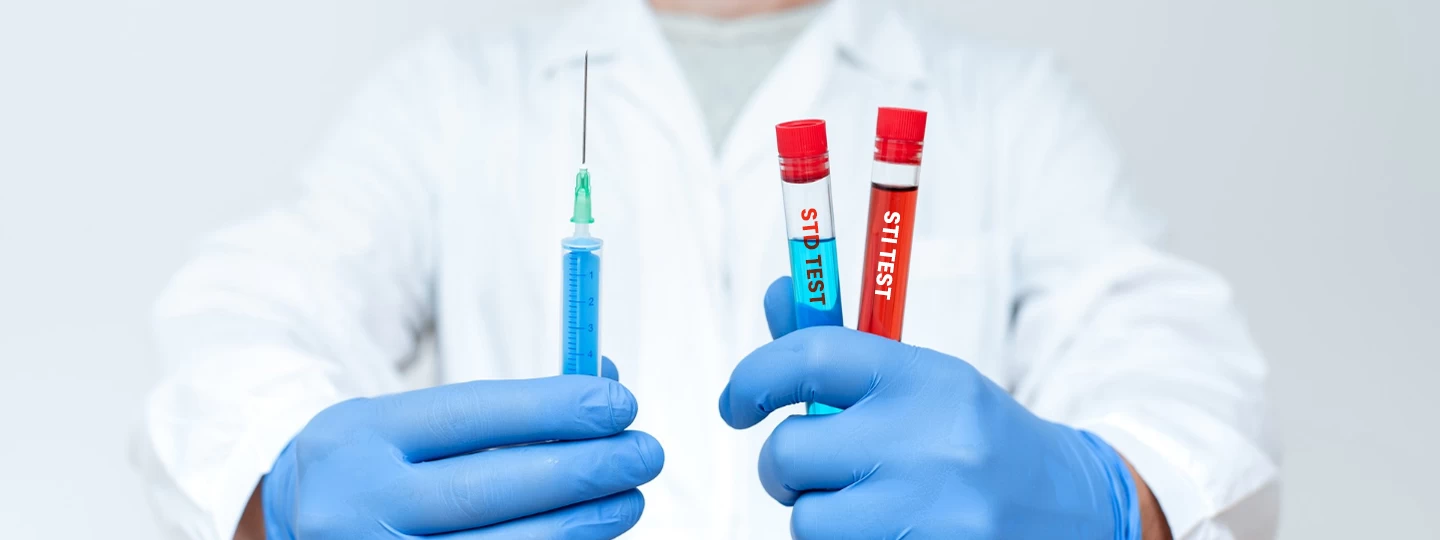
We receive numerous inquiries regarding STD/STI distinction, with the majority of people not understanding that there is no difference between STDs and STIs by full health check up. STD refers to intimating transmitted diseases, and STIs mean sexually transmitted infections. Regardless of which label is used, both represent infections that are transmitted via sexual contact between individuals.
Historically, these diseases have been classified as venereal diseases (VDs); some common street names include "the clap" and "the drip." The medical community has migrated toward using the term STI because it is a more accurate scientific description and creates less social stigma than using the word disease.
Infection vs. Disease: Why the Distinction Matters
To understand why 'STI' is the preferred term for healthcare providers, we need to examine how the immune response to pathogens occurs in the body. When your body is infected with a virus, bacterium, or parasite, the immune system launches its own war against the foreign invader. However, when that infection causes signs and symptoms, damages organs, or leads to long-term chronic illness, we would call that disease.
Often, an STI won't even progress to a stage where you can say that you were diagnosed with a disease. In many cases, a lot of people know they are carrying an STI because they are asymptomatic; therefore, most healthcare providers prefer to use the term 'infection', meaning it can be treated or managed before any permanent harm occurs to the body.
Why Do We Still Use the Term "STD"?
Even with the shift towards using "STI," the concept of mentioning STD is still a common expression among everyone. The reason that "STD" has been established longer than other terms is that most people will search the internet and talk to their doctors when trying to find something. Therefore, their efforts have been aimed at finding resources to assist their patients, but they, too, have continued to use these terms interchangeably.
Ultimately, it does not matter what you call these sexually transmitted infections; what is most important is taking care of yourself and your partner through consistent testing and safe sex practices.
Key Differences at a Glance
Feature | Sexually Transmitted Infection (STI) | Sexually Transmitted Disease (STD) |
Definition | parasites (bacteria/virus) enter the body. | Damage to body function or structure. |
Symptoms | Often invisible or asymptomatic. | Usually involves visible symptoms or illness. |
Progression | The initial stage of the condition. | The result of an untreated or chronic infection. |
Usage | Preferred by medical professionals to reduce stigma. | More common in public and historical contexts. |
Why a Hepatitis B Titer Test is Essential
Many STIs are caused by bacteria, for example, chlamydia. Others are caused by viruses, e.g., hepatitis B. A hepatitis B titer test is one part of a comprehensive health examination. While a standard test simply tests for the presence of a virus, a titer test measures how many antibodies are in your blood to determine whether you have been previously vaccinated or have recovered from a previous infection (and are therefore immune), or whether you are still at risk of contracting the virus.
Choosing the Right Health Packages for Peace of Mind
There is no need to be afraid of navigating your sexual and reproductive health. It's important to take charge of your sexual health by obtaining regular STI/STD screenings or tests as this is how to help reduce the risk of developing an illness if you are infected with an STI/STD.
At Mahajan Imaging & Labs, we are committed to providing you with a safe, private, and non-judgmental space for all your diagnostic testing needs. Our health packages will cover your entire health, from your Overall Physical Exam to your Cholesterol levels and Hepatitis B titer test. You will obtain excellent diagnostic test results from the highest-quality, most trusted healthcare organization in the area. Take your health to the next level! Choose clarity and care from the most trusted health partner in the region!
FAQS:
What is the actual difference between an STI and an STD?
An STI is the initial infection caused by a pathogen entering the body, whereas an STD refers to the disease state where that infection causes visible symptoms or physical damage.
Why do I need a hepatitis B titer test if I was vaccinated?
The hepatitis B titer test is necessary to confirm that your vaccine-induced immunity is still active, as antibody levels can decrease over time.
Can I have an STI without knowing it?
Yes, most STIs are asymptomatic, meaning you can carry and spread an infection without ever feeling sick or showing visible signs.
Are STI tests included in a standard blood workup?
No, standard blood work usually excludes these screenings, so you must specifically request them or select specialized health packages.
How often should I get tested?
Medical experts recommend getting a full health check up annually or whenever you change sexual partners to ensure early detection and prevention.


-1784264830.webp)
-1784177063.webp)
-1784009241.webp)
-1783922228.webp)